
Calhoun County Active Warrants Explained
An active warrant is live paper from a judge. No one has served it, recalled it, or quashed it, and it authorizes an officer to take the named person into custody. That status is not permanent. It can end any day the court acts. Calhoun County posts no one combined list of active warrants. Court files sit with the courts. City police handle their own requests, and the sheriff publishes law-enforcement and custody records. One Calhoun County search rarely reaches all three. Note: warrant status changes inside the court file, and a public page can lag behind that file by days.
What the County's P2C Portal Does and Does Not Claim
Sheriff pages link the county's Police to Citizen portal. The county points to it for current inmate information. That makes it a genuine official source. Nothing on it is described as a complete active-warrant list, though. A portal that will not load, or comes back empty, is an access gap rather than evidence either way. The sheriff home page is where Calhoun County publishes the portal link alongside records and jail navigation. Start there, then call the court on your paperwork.
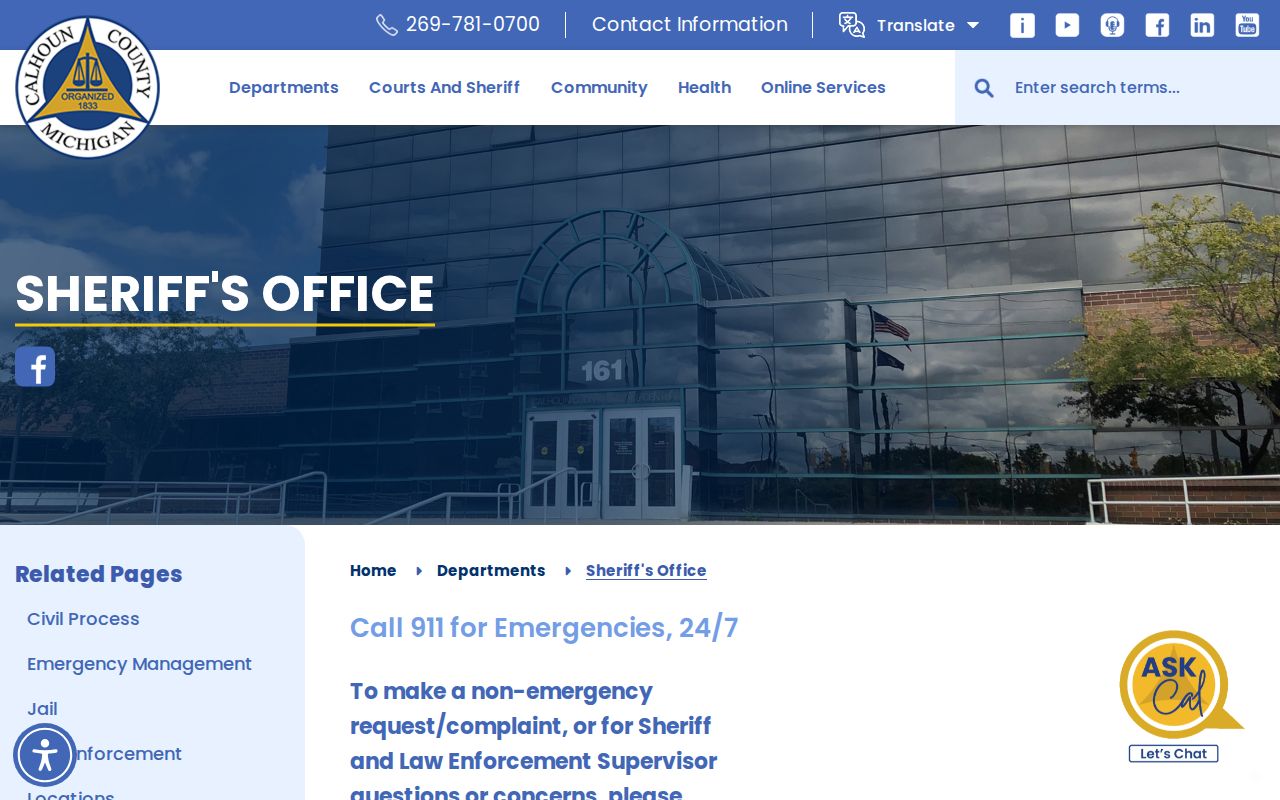
If the portal will not load, the fallback is a call to the Calhoun County court named on your paperwork.
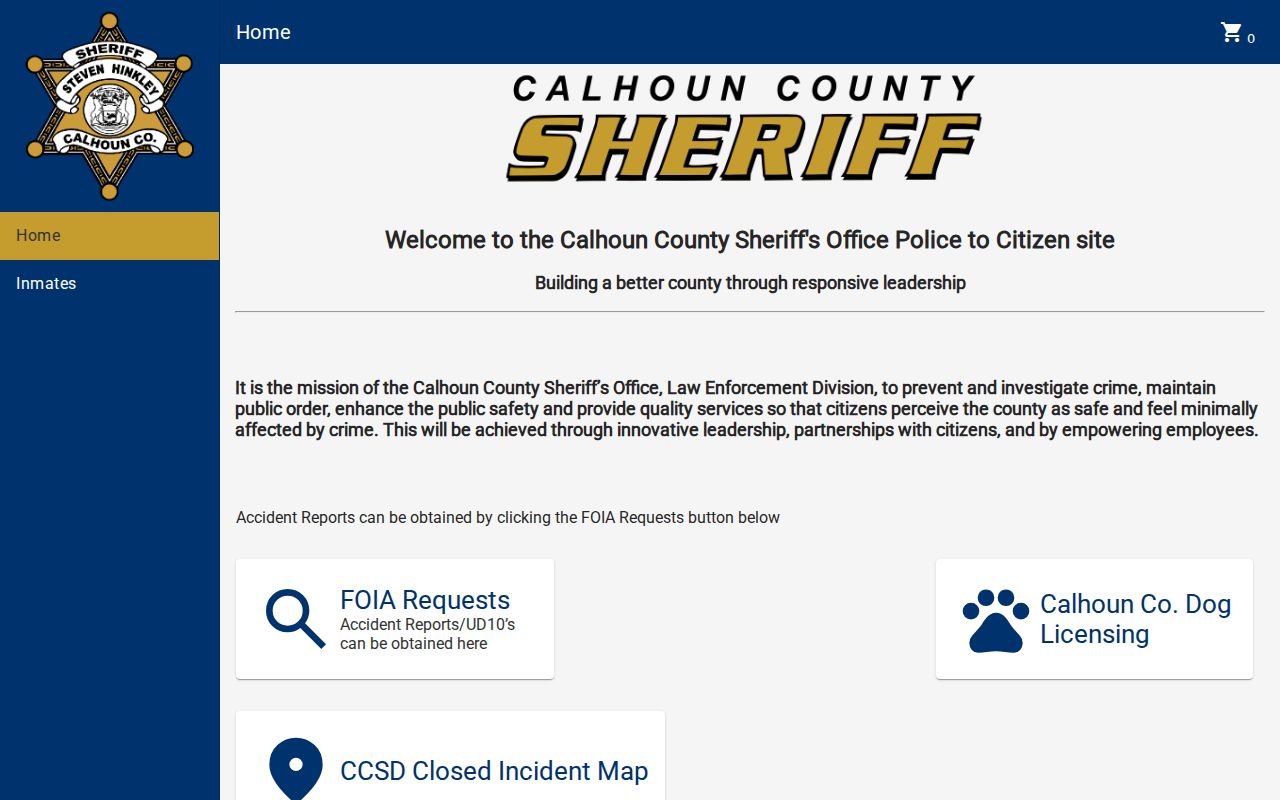
Note: a Calhoun County portal that will not load proves nothing about any warrant and changes nothing about the issuing court's authority.
How Calhoun County Tracks Active Warrants
A warrant in Calhoun County lives in three systems at once. The court file records issuance, service, and recall. The law-enforcement network holds the active pick-up status. The jail records custody at booking. Each system updates on its own rhythm. So a court clerk, a sheriff's records clerk, and a jail officer can give three different answers that are all accurate. Ask each office only the question it owns. Court status belongs to the clerk, agency records to the sheriff, and custody to the jail. Note: absence from the sheriff's portal does not prove no Calhoun County warrant exists, because the portal is not the court record.
Battle Creek's Weekly Signed Warrant Lists
Battle Creek Police publishes the deepest warrant-administration detail in Calhoun County. The city's warrant officer page lists the unit's tasks. It prepares weekly signed warrant lists. It maintains warrant-request information and runs monthly LEIN validations. It also handles out-of-county pickups, including billing for felony pickups. What the page never does is publish the list. There is no link, no search field, and no promise that the list is public or complete. The signed list stays an internal administrative product. A Calhoun County resident with a city warrant question still calls the issuing court, and a city record request goes through the city's own records process.
Inside an Active Warrant Record
A public entry shows a fraction of the file. The Calhoun County court record behind it carries more. It holds the issuing judge, the reason, the identifying details, and any bond condition the judge set.
| Case Number | Links the entry to the court file, shown in local form as 2026-000000-FH |
|---|---|
| Issuing Court | The Circuit or District court that signed the warrant |
| Reason | Failure to appear, a violated order, or a sworn criminal charge |
| Bond or Condition | Set by the judge, and only when the court has set one |
| Status | Active, served, recalled, or quashed as the court records it |
| Last Update | Rarely published, which is the main reason list entries mislead |
Jail Custody and an Outstanding Warrant Are Different
The Calhoun County Correctional Facility answers custody questions. It holds people awaiting court dates, serving sentences, or held for other agencies. It also rents unused beds to other jurisdictions. Staff can confirm who is in custody and when visits happen. What custody staff cannot do is tell you the status of an unserved warrant, set a bond, or recall a court order. The jail page points to current inmate information. The court still controls the case. One warrant question can touch all three offices, and the Calhoun County sheriff records division answers only its own part.
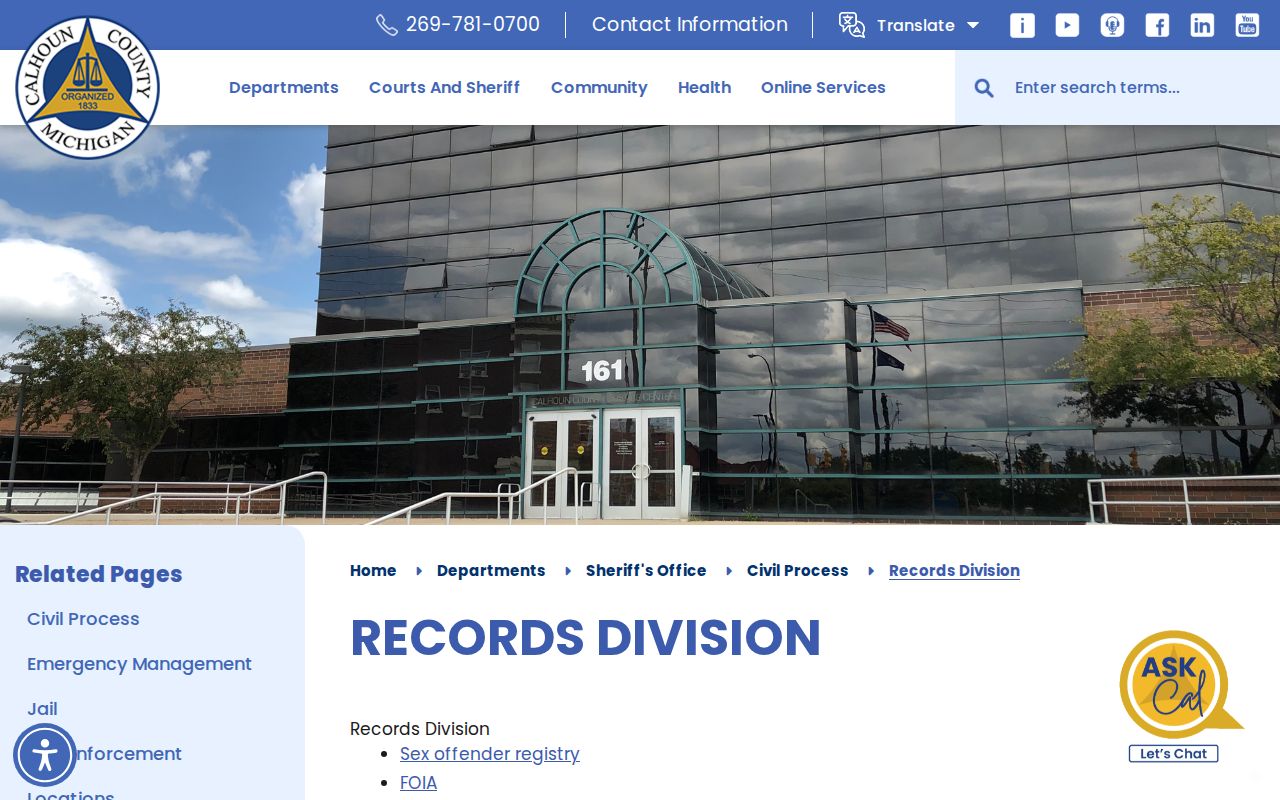
The Calhoun County sheriff records division handles the agency paperwork, a task neither the jail nor the court performs.
Warrant Roundups and Most-Wanted Lists
Curated most-wanted lists serve public-safety communication. They stay narrower than a full active-warrant file. Calhoun County and its city agencies run no most-wanted page and no amnesty or roundup event. Treat that as a plain gap rather than a reason to guess.
Key rules:
A curated list is a subset chosen by an agency, so it never represents every open warrant in the county.
An entry on a public list is an allegation carried in process, and only a court decides what happens next.
Official lists belong on the agency's own page, and they are linked rather than copied in full.
The U.S. Marshals Service runs a separate federal fugitive program. The county most-wanted page covers how to tell it apart from Calhoun County lists.
What an Online Warrant Entry May Omit
Treat any online warrant entry as a hint, not a file. Pieces go missing, and the gaps tend to be the ones that count. A recall filed yesterday can lag before it shows up today. Sealed and juvenile matters may never appear at all. A warrant issued outside Calhoun County may simply never surface in a Calhoun County search, so a clean screen is not proof that nothing is open. Bond details cause the most confusion. A public entry rarely says whether bond was set, what type applies, or whether a judge changed release conditions at a hearing. Those answers live with the issuing court, and with the jail in custody matters. So read each entry as a reason to call the court rather than a full account of the case.
When Your Name Is on the Warrant List
A name match is not a case match, and Calhoun County public screens produce false hits all the time. Common surnames do it. So do middle names swapped for first names and birth years a year or two apart. Before acting on what you saw, confirm the hit against the case number. If the warrant is real, the next moves belong to a lawyer and the issuing court. The county warrant information page tells anyone planning to turn themselves in to call the right court first, since that call answers the practical questions about surrender and bond. The county warrant overview gathers the resolution steps, including what to ask, what to bring, and why no page can promise a same-day outcome. Note: never pay a caller who threatens arrest, because official offices in Calhoun County do not collect warrant payments by phone.
Confirming a Listed Entry With the Issuing Court
A confirmation call to a Calhoun County court takes about five minutes when you come prepared. Bring the case number, the court name, and the exact spelling on the paperwork. Then ask three questions in order.
- Does this case currently show an active warrant or a failure-to-appear entry?
- If it does, what does the court require next: an appearance, a payment, a motion, or counsel?
- What confirmation can the court give me in writing once the matter is addressed?
Calhoun County District Court handles traffic, misdemeanor, and ordinance questions at 269-969-6666. The Circuit Clerk takes felony and family questions at 269-969-6518, and Friend of Court handles support matters at 269-969-6500.