
Calhoun County Arrest Warrants Explained
An arrest warrant is paper with real power. It lets an officer take a named person into custody and bring them before a judge, and it exists only because a court decided the accusation supports it. Calhoun County splits this work between two courts. Felony cases and larger investigations go to the 37th Circuit Court, while misdemeanor and ordinance matters go to the 10th District Court. Both sit in the Justice Center in Battle Creek, and each keeps its own file. Your first stop is the clerk on the right side of that split. That clerk can pull the case, quote its status, and tell you what the judge requires. Note: a warrant only authorizes the arrest, and the case that follows decides what happens to the charge.
Complaint, Probable Cause, Warrant: The Michigan Sequence
Michigan law fixes the order of events. A complaint is sworn before a magistrate or a clerk authorized to take oaths. The magistrate then weighs whether reasonable cause exists. Only on that finding does a warrant or summons issue. Calhoun County courts follow that same sequence in every criminal case. Once a warrant issues, the statute spells out what it does: it recites the substance of the accusation, is directed to a peace officer, and commands an immediate arrest with the accused brought before a magistrate without unnecessary delay. The officer then files a return recording what happened. The warrant statute is the source of that command language.
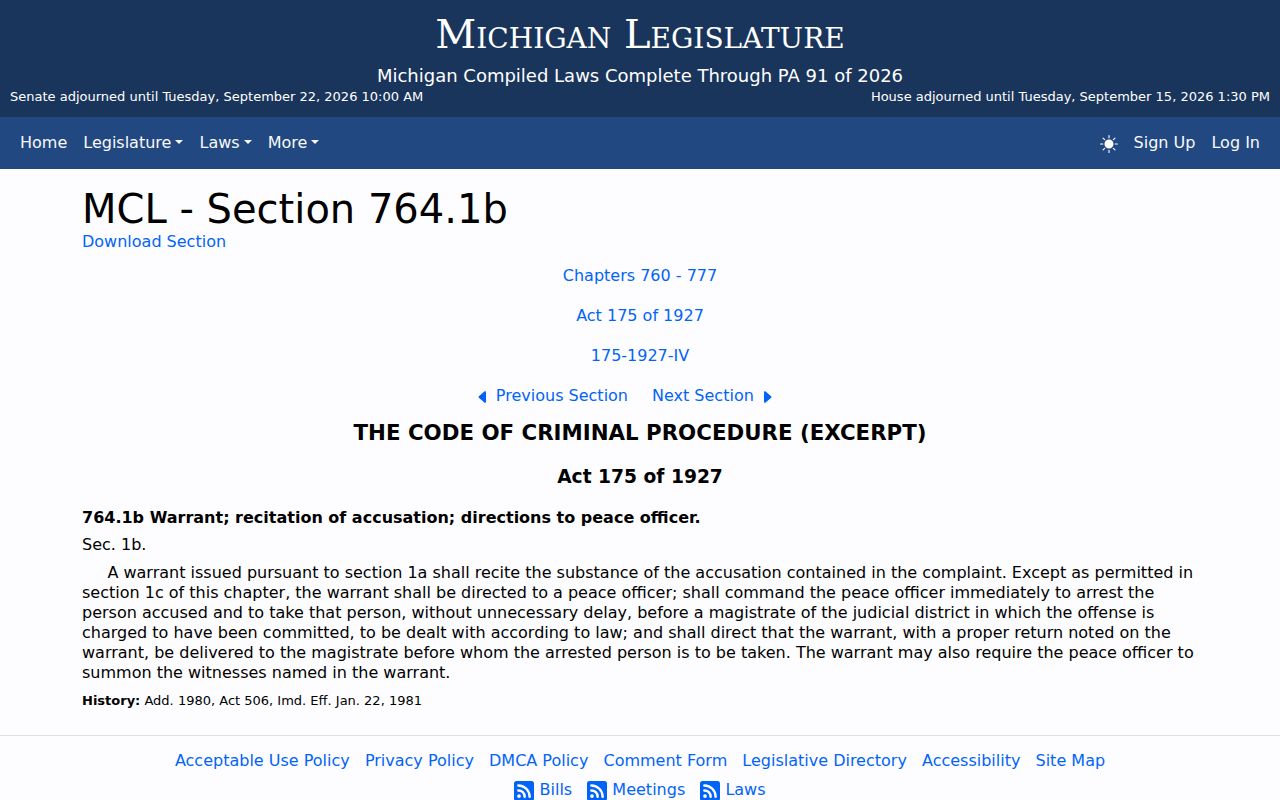
Read it as the authority behind the process, not as a public search method.
Inside a Calhoun County Arrest Warrant
A Calhoun County warrant file carries plenty of detail. It holds enough to identify one person and route the case, which is why a name alone makes a shaky match. Public search screens show only part of the list.
| Case Number | Joins the warrant to the court file, formatted locally as 2026-000000-FH |
|---|---|
| Accusation | The substance of the offense as the complaint describes it |
| Probable Cause Finding | The magistrate's decision that supports issuing process |
| Issuing Officer | The judge or magistrate who signed, with the date |
| Command | Direction to a peace officer to arrest and bring the person to court |
| Bond or Condition | Set by the court, and only if the court has set one |
| Return | The officer's record of service, which closes the process step |
Why a Police Warrant Request Is Not an Issued Warrant
Police language can make a warrant sound further along than it is. Battle Creek's warrant unit, for instance, says it maintains and manages warrant-request information. A request is just paperwork an agency prepares. Issuance belongs to the court, not the department. That gap explains two common puzzles in Calhoun County. A department can report a request on file while the court shows nothing issued. And once a judge signs, the department cannot withdraw the warrant, because the case now belongs to the court. When the answers differ, the court file controls. Ask the issuing court for the case status, and if something is open, what the court requires of you.
Serving Arrest Warrants in Calhoun County
Serving a warrant is police work. In Calhoun County, several agencies handle it. The sheriff's office covers the county and staffs dedicated law enforcement for Springfield, Homer Village, and Convis, Lee, and Sheridan townships, while city departments such as Battle Creek, Marshall, and Albion serve process inside their own boundaries. A warrant can arrive almost anywhere. Officers serve them at traffic stops, at homes, and after investigations. A local agency may also pick up someone on a warrant issued in another county. Battle Creek's policy on warrant service addresses that cross-jurisdiction work and leaves responsibility with the requesting agency. One thing no agency can do is cancel the warrant. That power sits with the issuing court. Only the court can recall or quash it. Note: a jail roster shows custody, and it never lists every unserved warrant in the county.
The Sheriff's Three Calhoun Service Locations
The Calhoun County sheriff lists three locations, and each answers a different set of questions. Check which building handles your issue before you make the trip. The Marshall and Springfield addresses also serve city functions.
Battle Creek houses the sheriff's records and corrections operation at 161 E. Michigan Avenue. The Marshall Regional Law Enforcement Center, 714 Old US 27, shares its address with Marshall Police. Springfield's office sits at 601 Avenue A inside the city public-safety building. Treat these as agency and custody contacts. Court status still belongs to the clerk who holds the case.
Comparing Arrest, Summons, and Bench Warrants
Three kinds of paper can require a court appearance, and the stakes differ sharply. A bench warrant follows a missed court date. A summons just orders you to appear. Michigan court rules let a court choose a summons over an arrest warrant in many situations, with exceptions for assault or domestic violence allegations, a risk the person will not appear, a public-safety concern, or a prosecutor's request. Calhoun County judges weigh those same factors when deciding which paper to issue.
| Document | What It Means | Typical Trigger |
|---|---|---|
| Arrest warrant | Authorizes custody and a court appearance | Sworn complaint with probable cause |
| Summons | Orders an appearance without an arrest order | Court chooses it under the rule |
| Bench warrant | Returns a person to an existing case | Missed appearance or violated order |
| Citation | Charges a civil infraction or misdemeanor | Traffic or ordinance stop |
Civil Process, Court Fines, and Arrest Warrants Are Separate
People in Calhoun County often mix up two online payment systems with bail. Neither one works that way. The 10th District Court fines and costs system takes payments for tickets and court debt. The sheriff's civil-process system takes payments for serving civil papers such as summonses and eviction documents. That is the whole of it. Neither system is a bond window, and neither payment can recall an arrest warrant. Calhoun County publishes no universal warrant bond amount, no online bond payment, and no surrender fee. So treat any figure quoted online without a source as noise. The county-linked sheriff civil process form shows how narrow the service is: it asks for a case sequence number or a defendant's name and a payment note, and says nothing about criminal charges.
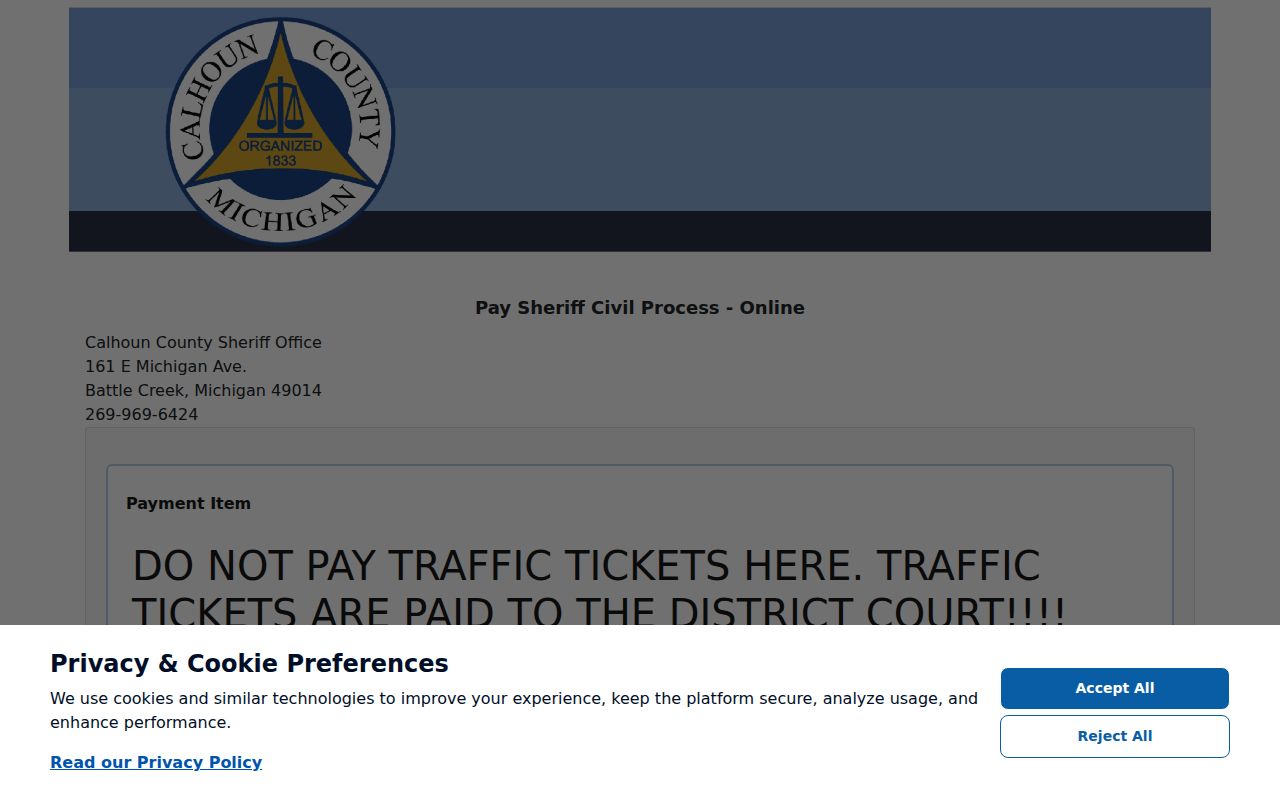
That page has nothing to do with criminal bail in Calhoun County, and no civil-process payment can recall an arrest warrant.
If There's an Arrest Warrant for You
Confirm the case before you act. Call the issuing court in Calhoun County, ask whether the warrant is open, what bond or conditions apply, and what the court expects next.
Important: Contact a Michigan attorney before turning yourself in. Walking in without a plan can mean a weekend in custody instead of a scheduled appearance.
Then choose a path with counsel. A voluntary appearance, a motion to recall, or a posted bond all follow court procedure. Calhoun County publishes none of them as a self-service form. Once the matter is addressed, ask for written confirmation of the order, the next date, and any remaining condition. The county's warrant information page routes a person who wants to turn themselves in to Friend of Court, the Circuit Court, Judicial Enforcement, or the District Court, depending on the case.
Federal Warrants Are Not Calhoun Warrants
Calhoun County belongs to the Southern Division of the Western District of Michigan. A federal case involving a Calhoun resident is filed in the federal system, not in the 37th Circuit or the 10th District. The local criminal rules for that district list Calhoun among the Southern Division counties, the clearest official statement of where the line falls.
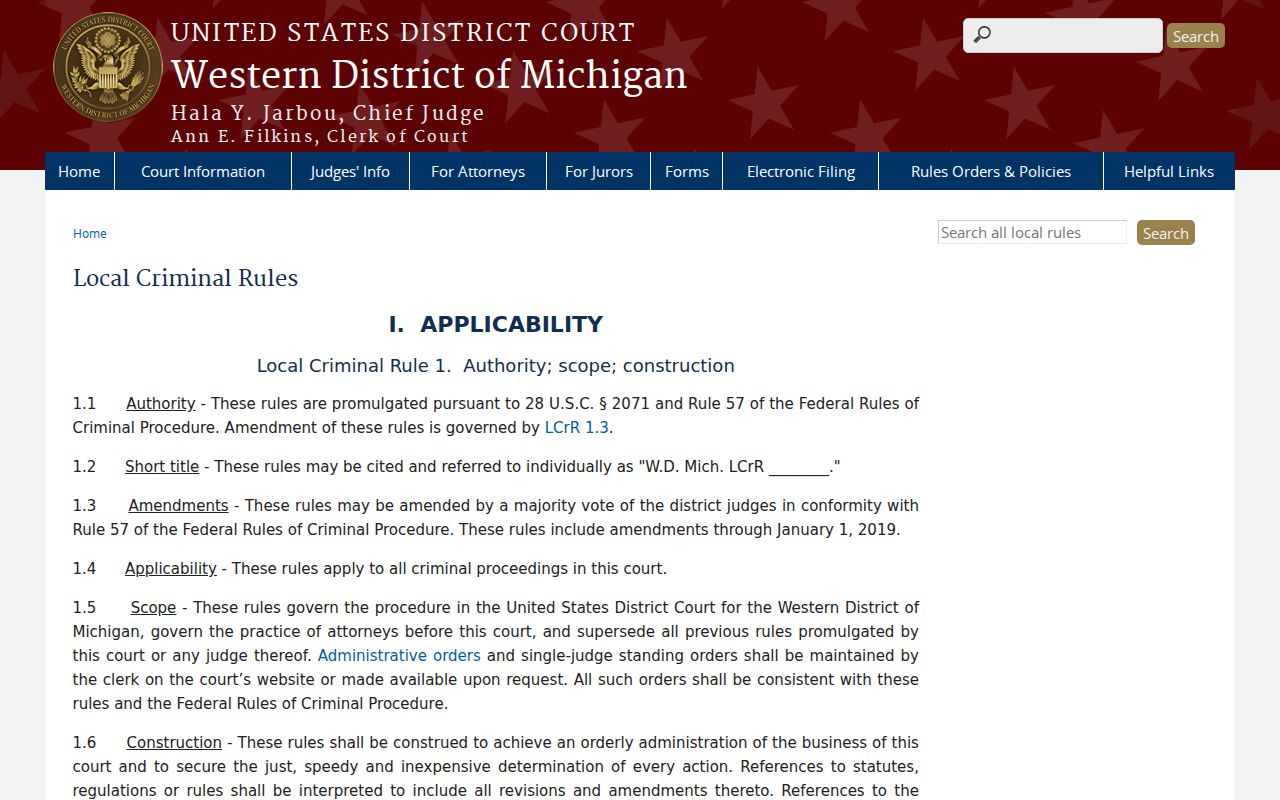
Neither county clerk can recall a federal warrant. A Calhoun County records request cannot reach a federal court file either. The federal court publishes its own locations and clerk contacts, and its Kalamazoo courthouse handles the Southern Division at 107 Federal Building, 410 W. Michigan Avenue.
Federal dockets are read through PACER. It covers filed documents, not a public warrant list. Sealed federal matters do not appear at all, so an empty result says nothing about whether process exists, whatever a Calhoun County searcher hopes to find.
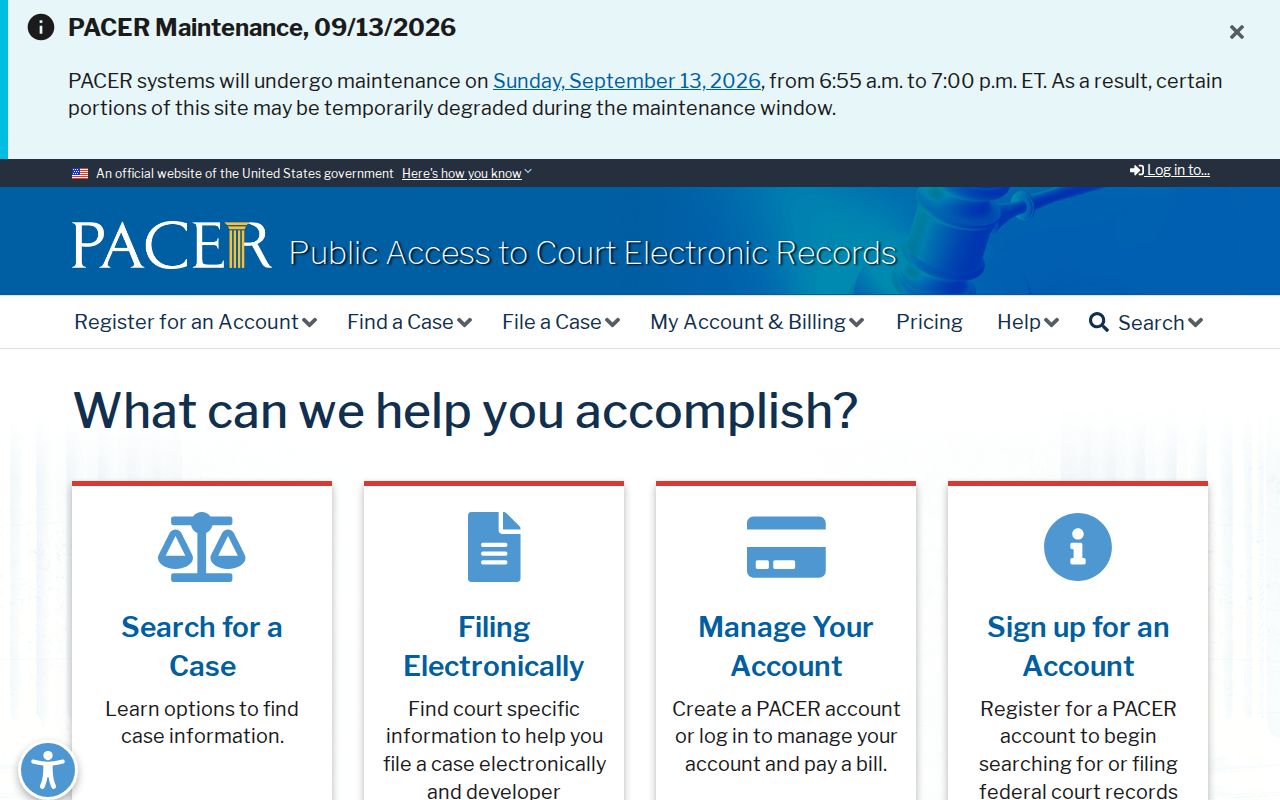
If the paper names a federal court, call the federal clerk. Calhoun County staff cannot confirm, recall, or clear federal process.
How to Verify a Caller Claiming to Be a Deputy
Battle Creek police warned residents after callers posing as deputies collected more than $20,000 by demanding payment for supposed warrants. Neither the department nor the sheriff's office asks for money, gift cards, or cryptocurrency by phone. Hang up on any caller who does. Write down the number and name used first. Then call the agency directly. In Calhoun County, sheriff records answers 269-969-6431, the sheriff's front desk answers 269-969-6450, and the District Court answers 269-969-6666. Verify before paying anything. Never send money to a caller who supplies the number you are supposed to trust.